
Love For One Night began not with a script, but with a room full of ideas, people, and possibilities.
The work was created through a devised theatre-making process: a form of collective making where story, script and performance emerge through collaboration, improvisation and experimentation.
As NORPA returns to the production in 2026, that spirit of invention remains at its core. It is why we describe our works as being built from the ground up.
Book tickets to the 2026 season
1. Idea
The idea for Love for One Night grew from squiggles on a whiteboard, looping and linking images and concepts.
A country pub
The classic Aussie pub band
Love found. Love lost
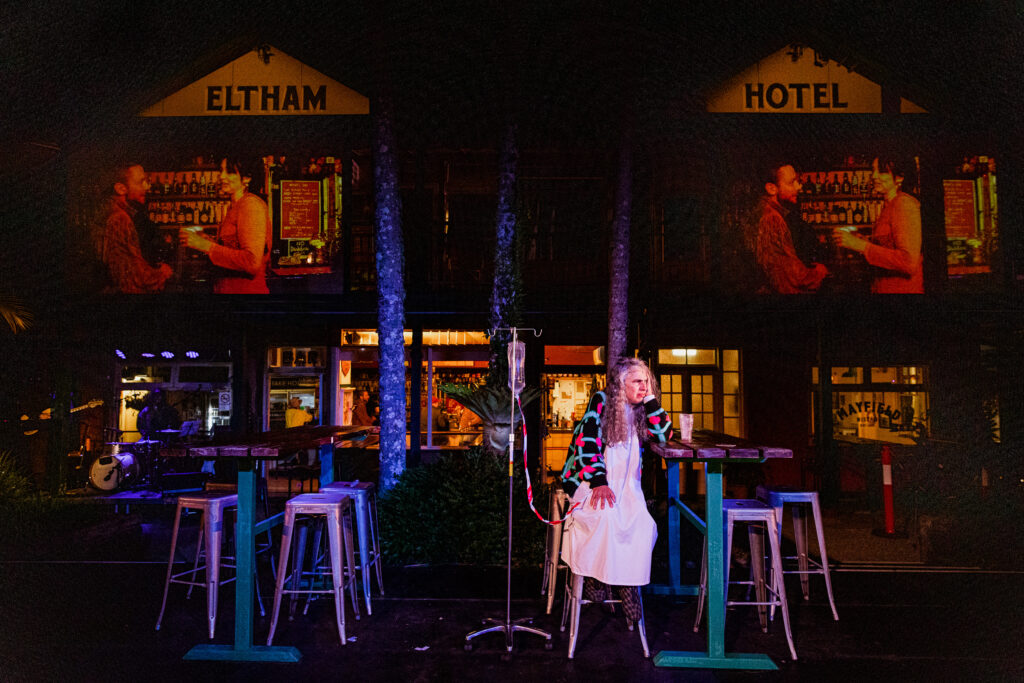
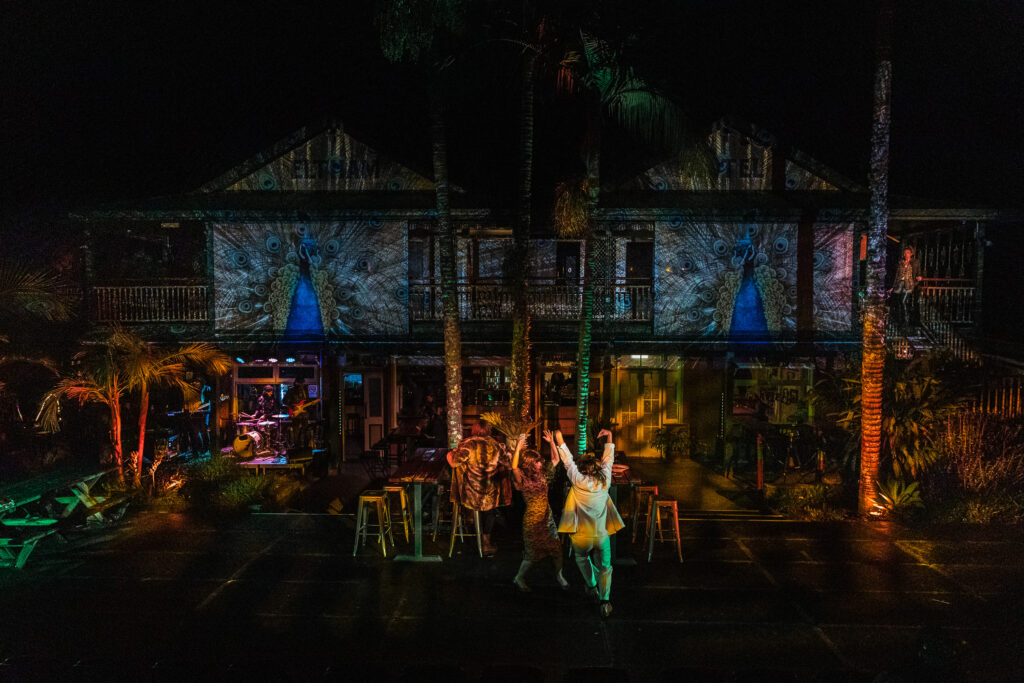
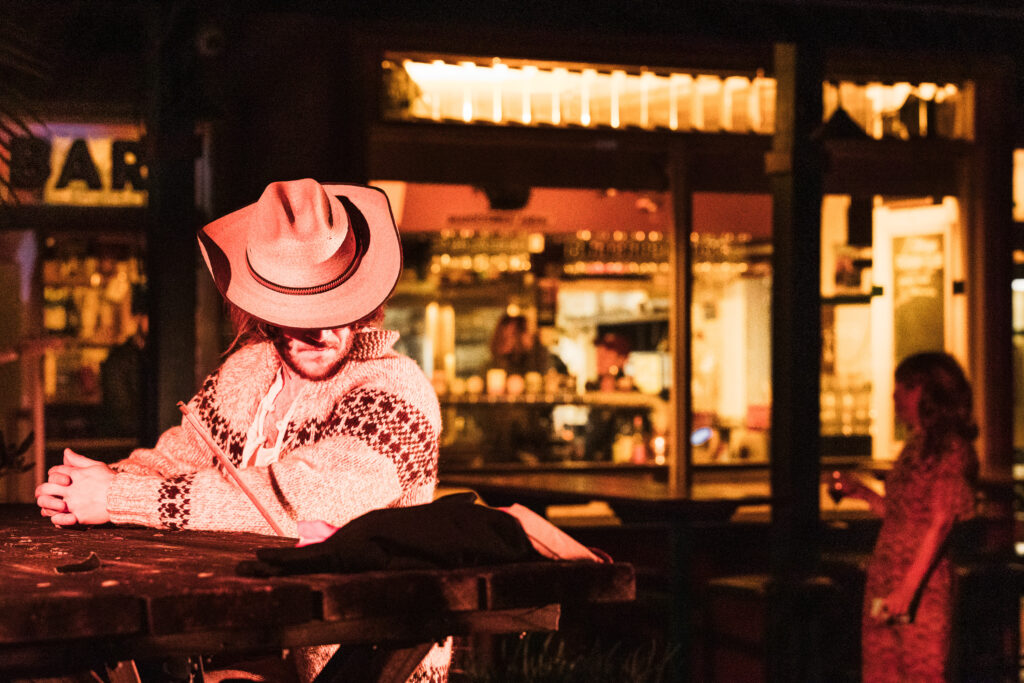
At the centre of it all was a real place — The Eltham Hotel. A place that feels, somehow, both like the middle of nowhere and the centre of everything. Returning to the work in 2026, those original impulses still shape the production.
2. Research
The Eltham Hotel is more than a setting — it’s a living archive of stories.
Its welcoming and relaxed atmosphere carries a natural theatricality. The stories in Love For One Night were developed from observations of interactions at the pub, and from conversations with locals who generously offered their stories and experiences of love in all its forms: romantic love, infatuation, familial love, friendship and more.
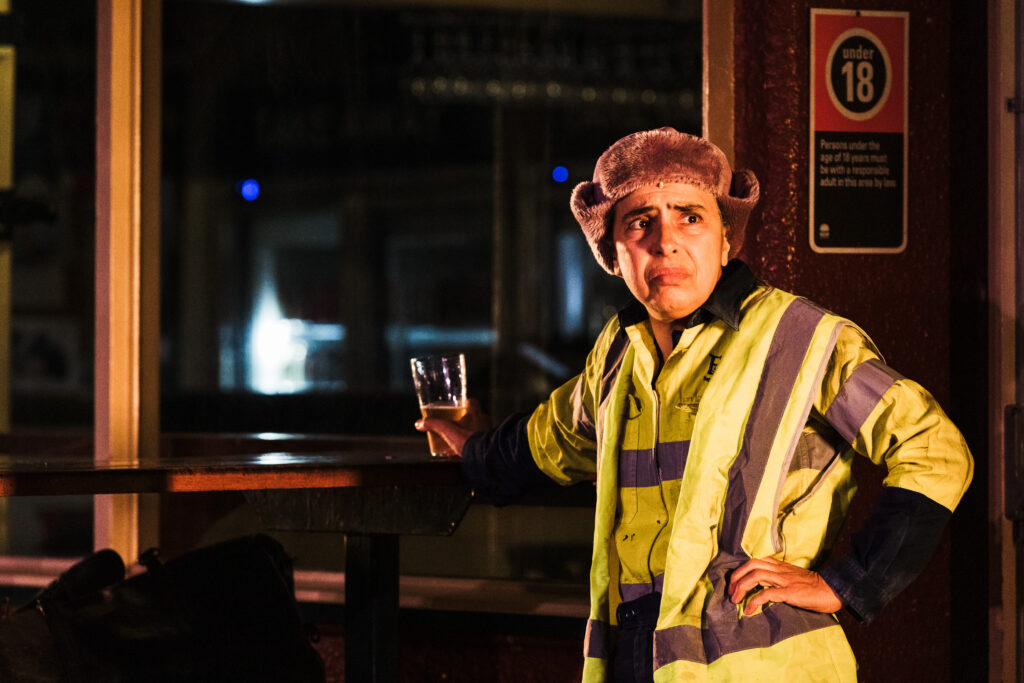
The form of Love For One Night was inspired by Schnitzler’s play La Ronde — often translated as “round dance” or “roundelay”. NORPA’s interpretation unfolds as a series of duets, where one actor/character from a scene stays on stage and is joined by a different actor/character in a new scene. This format allows performers the opportunity to play multiple roles and tell a variety of stories in playful and theatrical ways.
3. Exploration and play
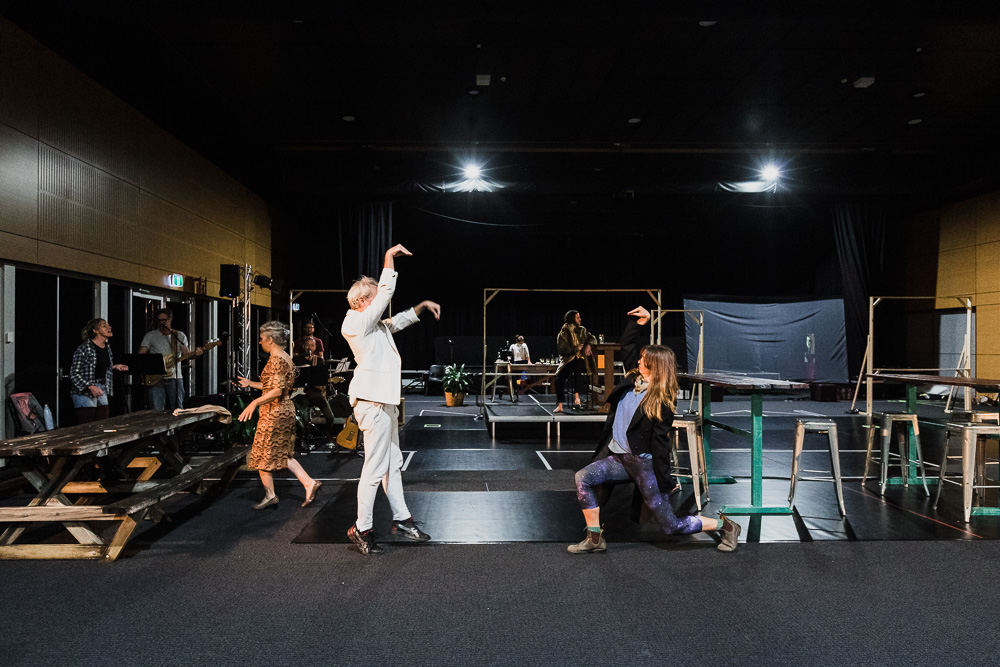
From there, the room is filled with people.
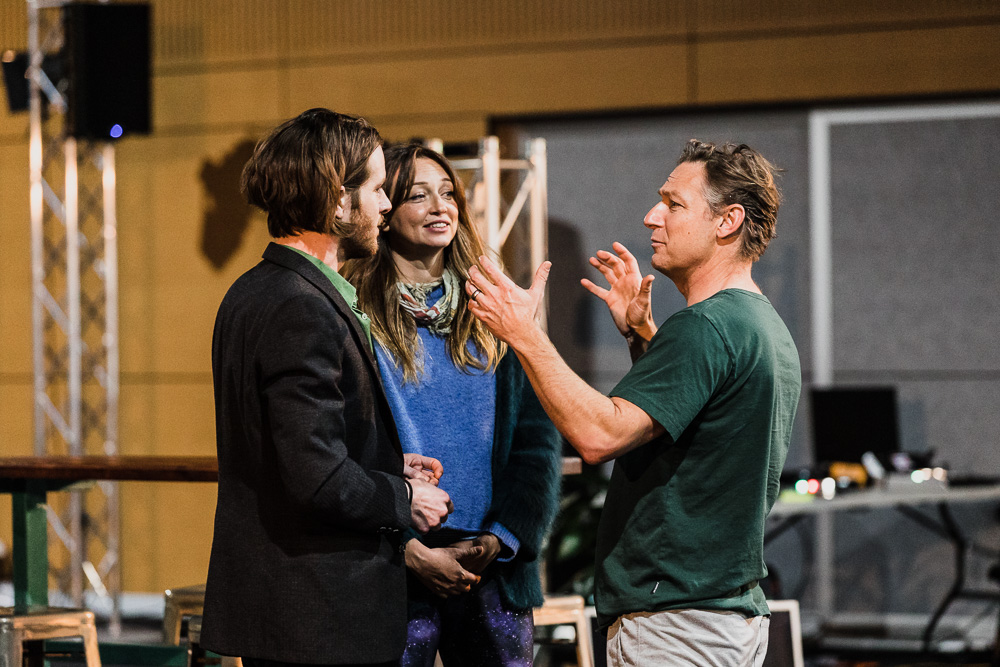
Director and devisor Julian Louis gathered actors and collaborators to explore the material through improvisation, movement and response.
Playwright and long-time collaborator Janis Balodis helped shape early scenarios, drawing on research gathered by Rick Bannister, alongside discoveries emerging in the room.
Scenes evolved in many ways:
- from real stories shared with the team
- through improvisation
- via genre-play
- through adaptations of other narrative forms.
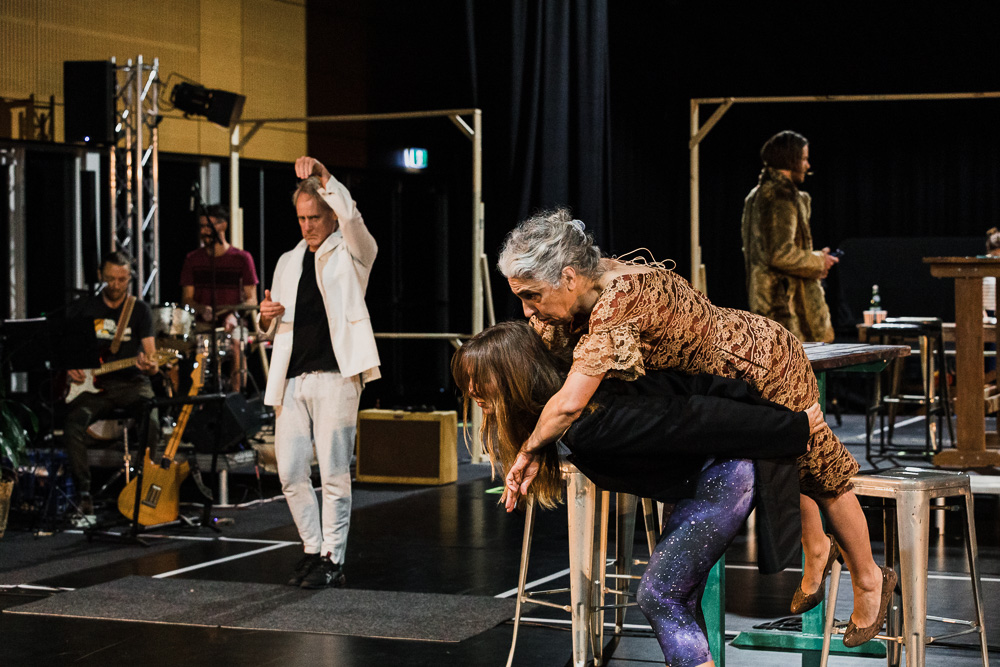
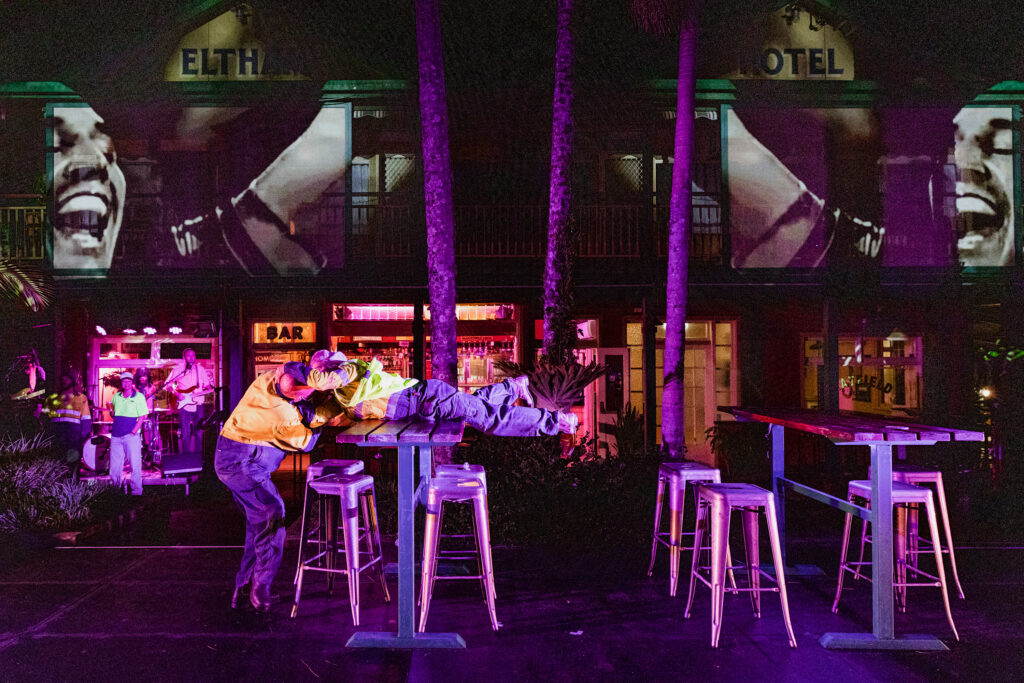
The result allowed for scenes of dialogue with space for physical action, music and dance.
4. Creative development
Devising opened the door for every collaborator to contribute.
Actors, director, writer, choreographer, composer and designers each helped shape the work — testing scenes, building sequences and refining how the stories connected.
Crucially, development extended beyond the rehearsal room. Early versions of scenes and movement were tested at the Eltham Hotel itself, grounding the work in its environment.
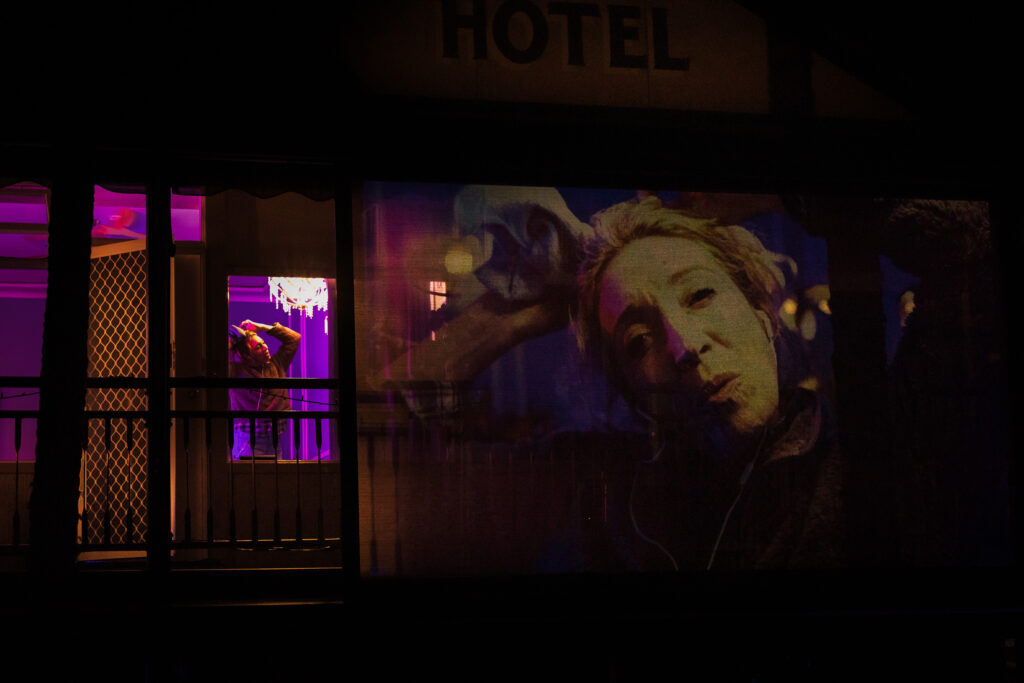
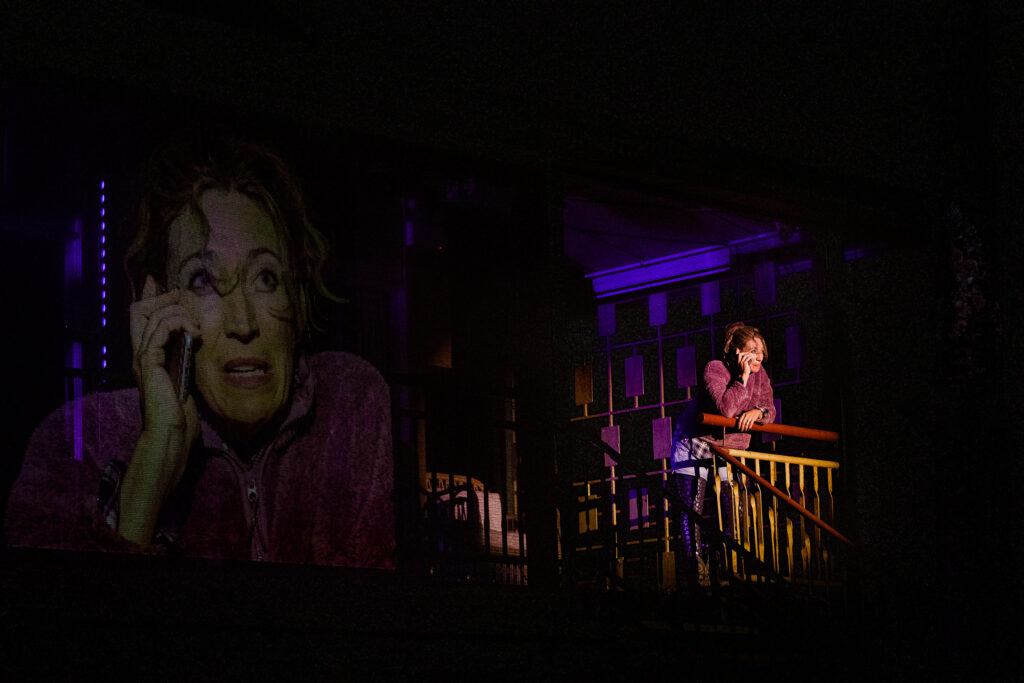
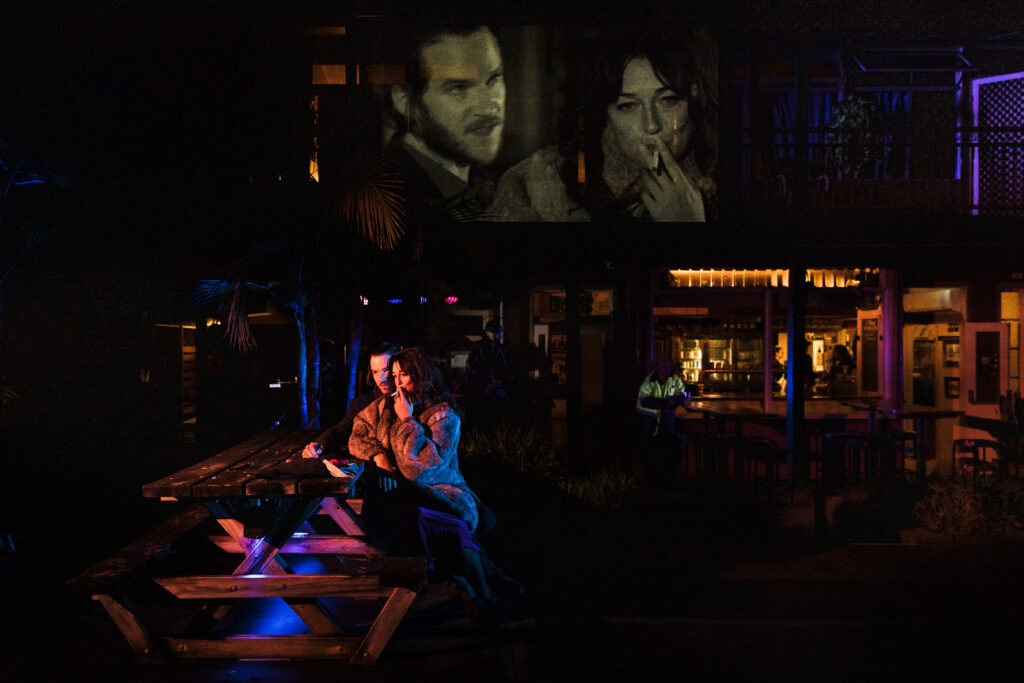
During this phase, the team also experimented with live-streamed video — a creative decision that expanded the visual language of the production.
5. Rehearsals
By the time rehearsals began, the work had a shape — but it was far from fixed.
Julian and Janis continued refining the structure, scripting scenes, and integrating music and movement. Discovery didn’t stop; it deepened.
That’s the nature of devised work. It evolves through doing.
In revisiting the piece for 2026, the process shifts slightly. The team returns with knowledge of what has worked before, while searching for fresh and sharper ways to bring the story to life for a new audience.
6. Performance
The final stage is performance — where all of these layers come together in real time.
What audiences see is the result of play, risk, collaboration and many voices woven together.
We hope that, by sharing something of this process, audiences can experience Love For One Night not just as a story, but as a living work — full of theatrical surprises, human connection, and moments that feel both crafted and spontaneous.
LOVE FOR ONE NIGHT
27 Aug – 12 Sep 2026
Book tickets